
BLOG

Insights & Stories

Agronomic advice, customer stories and industry news.

ARTICLES

Articles

In-depth technical reads from our agronomy and engineering teams.

Article11 min

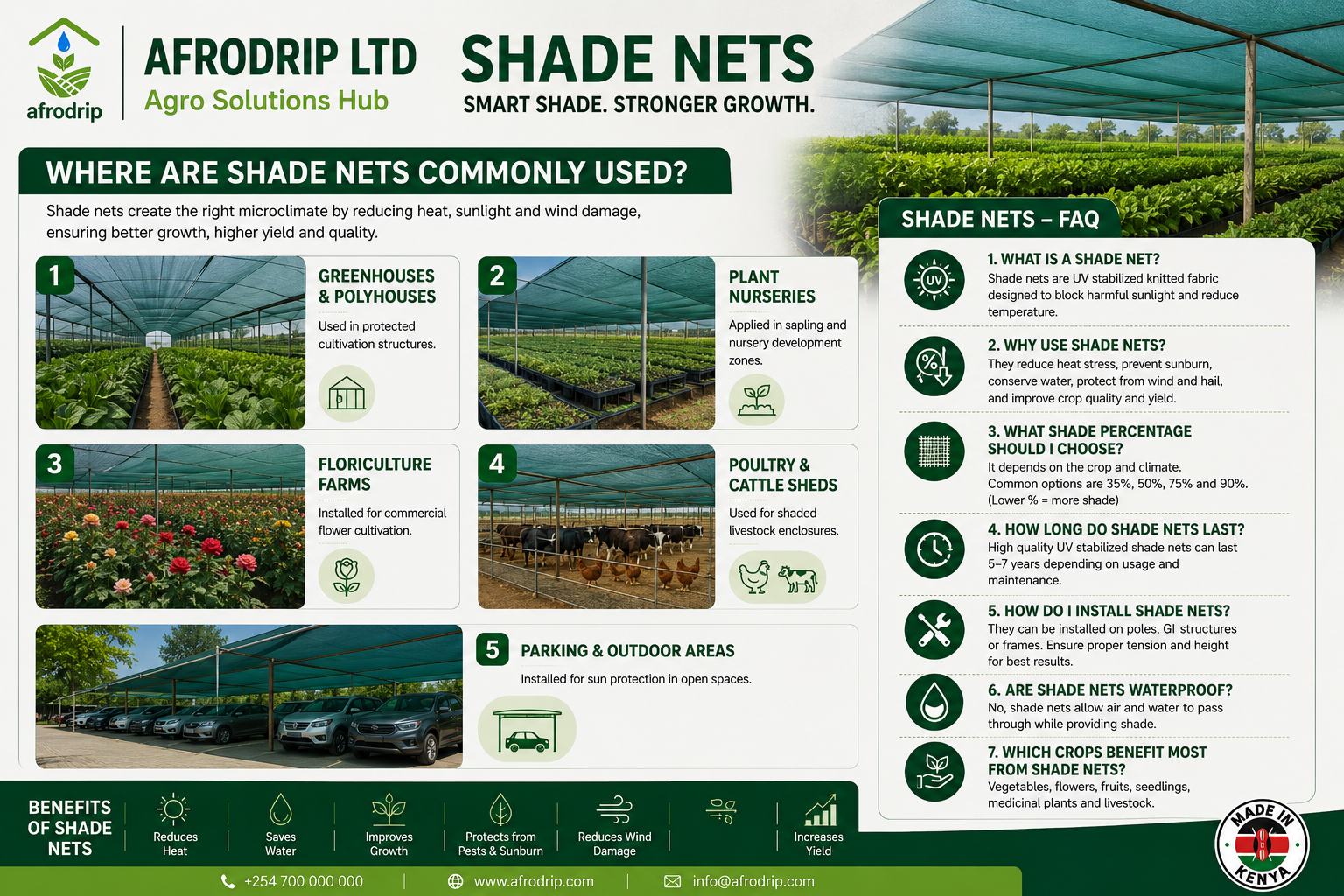
Shade That Works: A Grower's Guide to Shade Netting, From Selection to Season's End

What netting manufacturers, greenhouse technicians, and field growers actually recommend at every stage of a shade net's working life — choosing the right shade percentage and colour, installing it as a load-bearing structural element, keeping it tensioned and clean, and storing it properly.

Article11 min

Beyond the Mesh Number: A Grower's Guide to Insect Netting, From Selection to Take-Down

What netting manufacturers, greenhouse technicians, and field growers actually recommend at every stage — choosing the right mesh, installing it so it actually seals, running it season after season, and taking it down without wrecking it.

Article12 min

The Full Lifecycle of Drip Tape: A Grower's Guide from Selection to Retrieval

What manufacturers, field technicians, and experienced growers actually recommend at every stage of a drip line's working life — choosing it, laying it, running it, and taking it back up.

Article10 min

Beyond the Bag: What KALRO's Research Says About Using NPK Fertilizer Correctly in Kenya

Why Kenya's fertilizer problem is more about ratio than quantity — and how choosing an NPK blend that actually supplies potassium can outperform straight N-P products.

Article9 min

Feeding the Soil, Not Just the Crop: What KALRO's Research Says About Using DAP Fertilizer Wisely in Kenya

Why Kenya's most popular planting fertilizer works best when rate, placement, and soil pH are checked against the field rather than applied by habit.

Article10 min

Right Crop, Right Ground: A KALRO-Based Map of What Grows Best Where in Kenya

From the coconut palms of the coast to the pyrethrum fields of the upper highlands — a region-by-region guide to the crops, cereals and varieties KALRO recommends for each agro-ecological zone.

Article12 min

From Nursery to Nyanya: A KALRO-Based Guide to Growing Healthy, Profitable Tomatoes in Kenya

Irrigation, the diseases that most often ruin a Kenyan tomato crop, and the good agricultural practices that keep both water and pathogens under control.

Article11 min

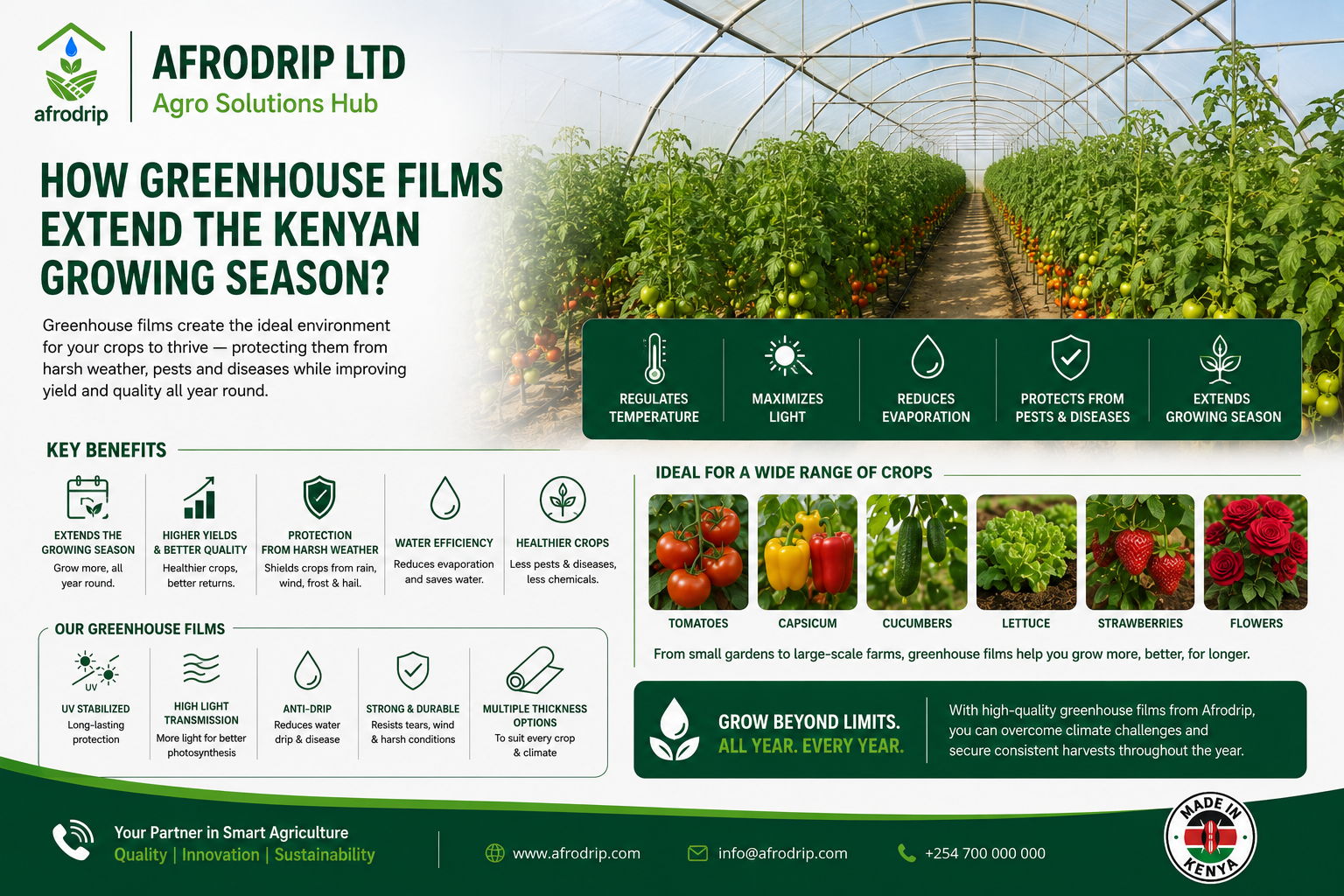
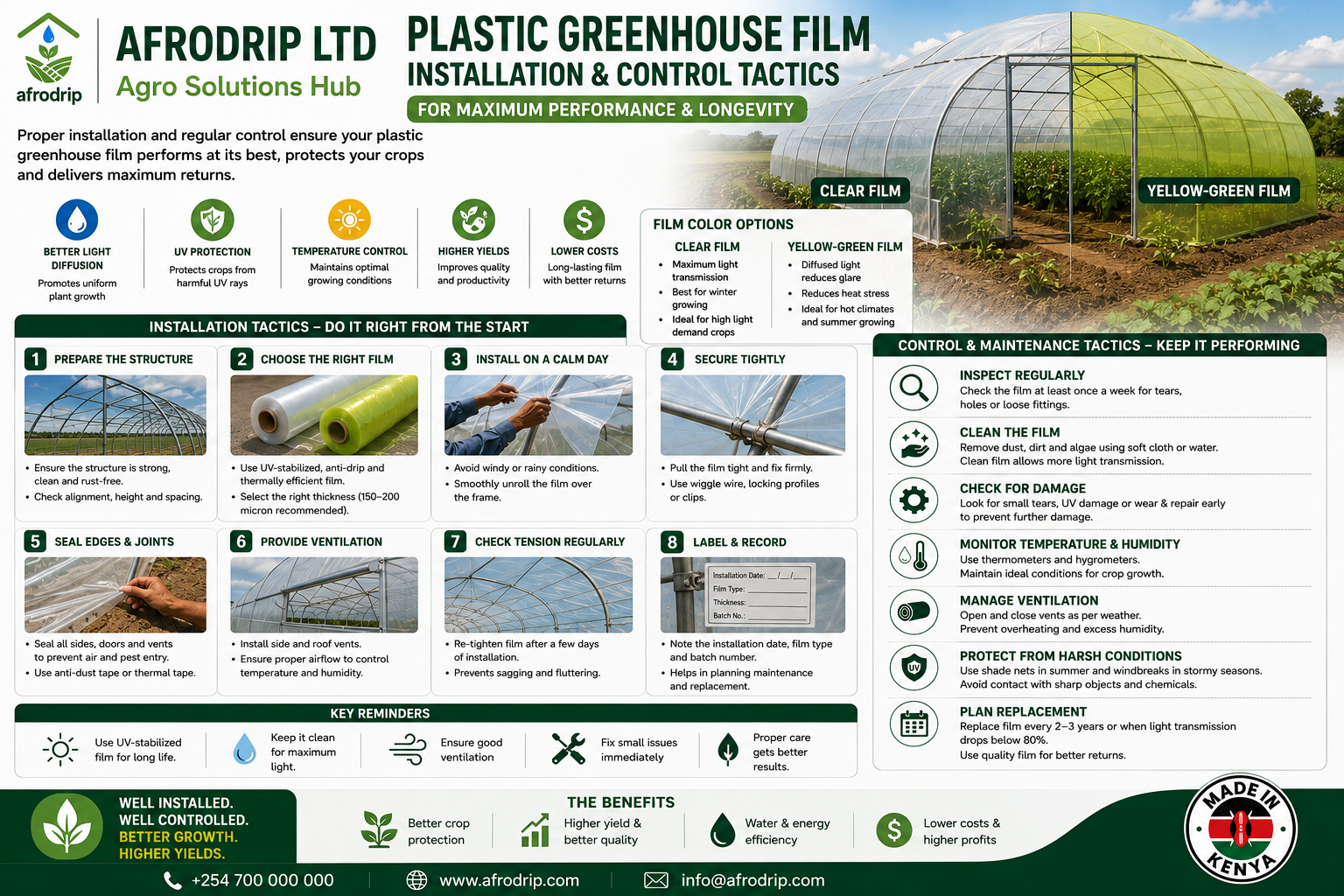
Seeing the Light: A Kenyan Grower's Guide to UV-Block, UV-Open, and Milky Greenhouse Films

How the plastic over your head decides what flies in, what pollinates, and what sells — a science-based film selection guide for Kenya's flower, vegetable and seedling greenhouses.

Article9 min

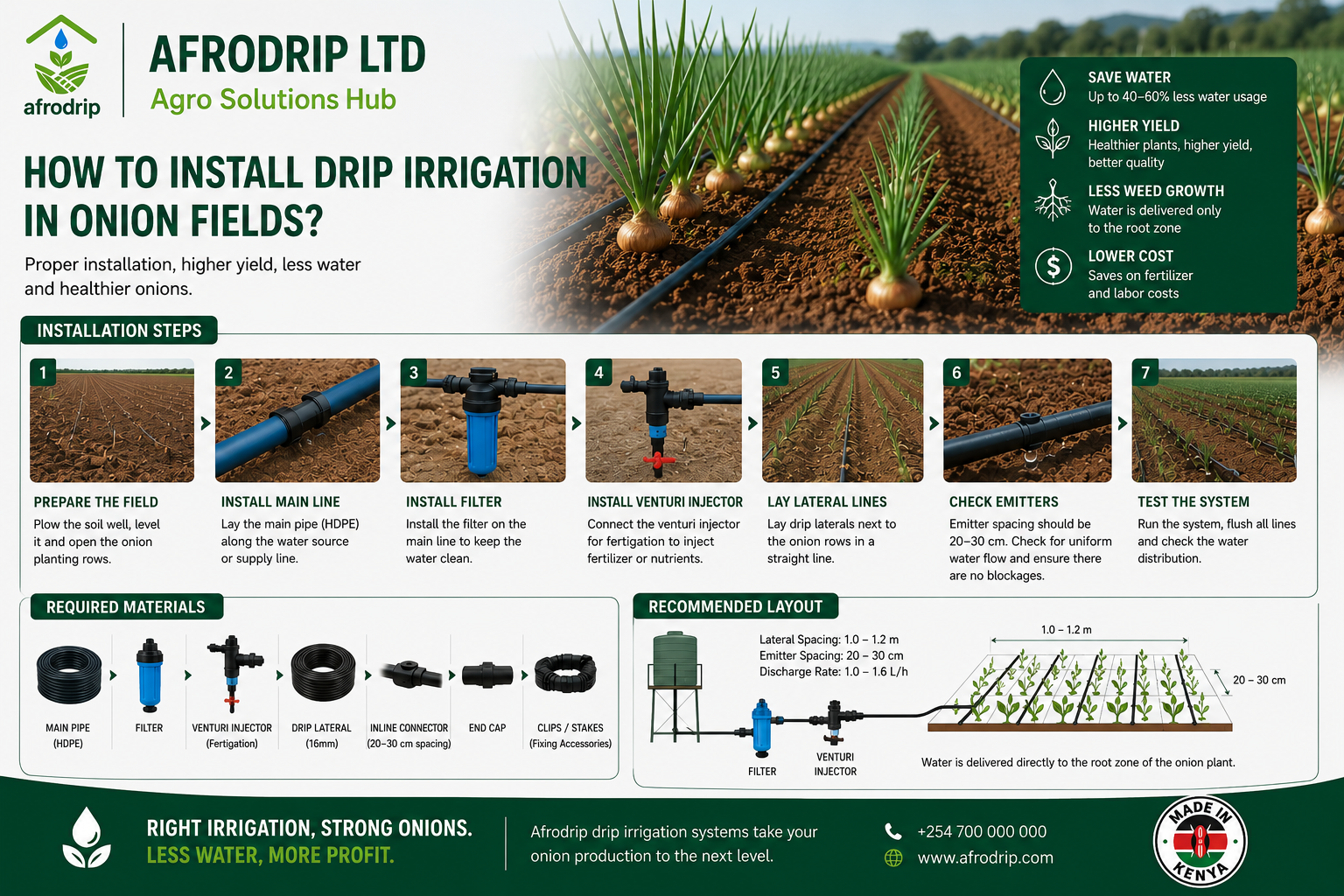
Shallow Roots, Close Drops: A KALRO-Verified Gravity-Fed Drip Irrigation Layout for 1-Acre Onion Farming in Kenya

A KALRO-matched onion dripline layout — 30 cm laterals and 10 cm emitters — with full equipment list, zoning and pressure guidance for a 2-metre gravity tank stand.

Article8 min

From Tank to Root: A Gravity-Fed Drip Irrigation Layout for 1-Acre Tomato Farming in Kenya

A practical layout and equipment list for irrigating 1 acre of tomatoes using a 2-metre gravity tank stand and AFRODRIP dripline.

Article10 min

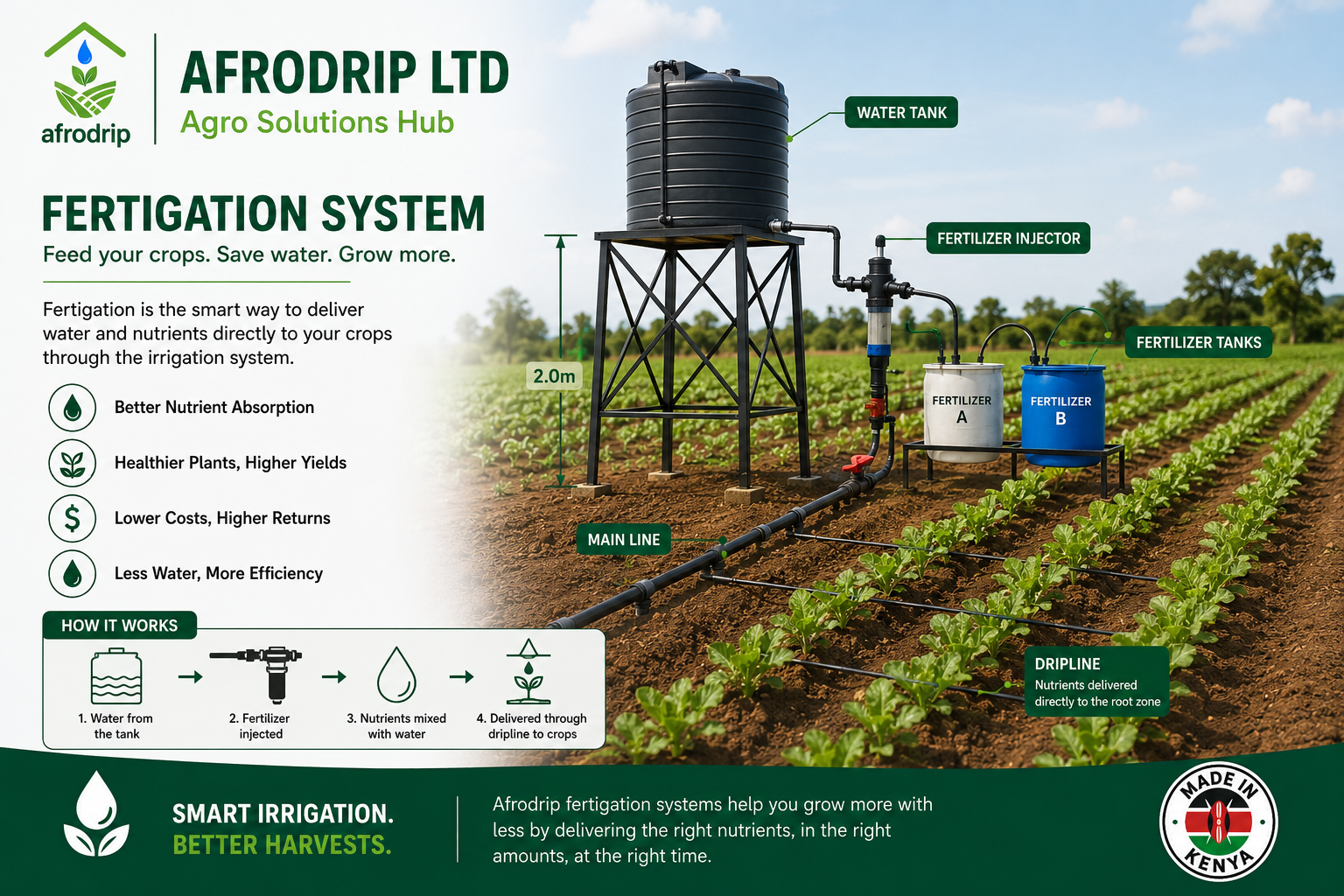
Feeding the Roots: The Case for Fertigation Alongside Irrigation on Kenyan Farms

Why fertigation is the highest-return upgrade for Kenyan farmers already using drip irrigation — evidence from Kenyan field trials, JKUAT engineering research, and international agronomic literature.

Article8 min

Water Quality and Filtration in Agricultural Irrigation: Protecting Your System

Why filtration is the single most important factor in reliable drip system performance, and how to choose screen, media, and disc filters for Kenyan conditions.

Article9 min

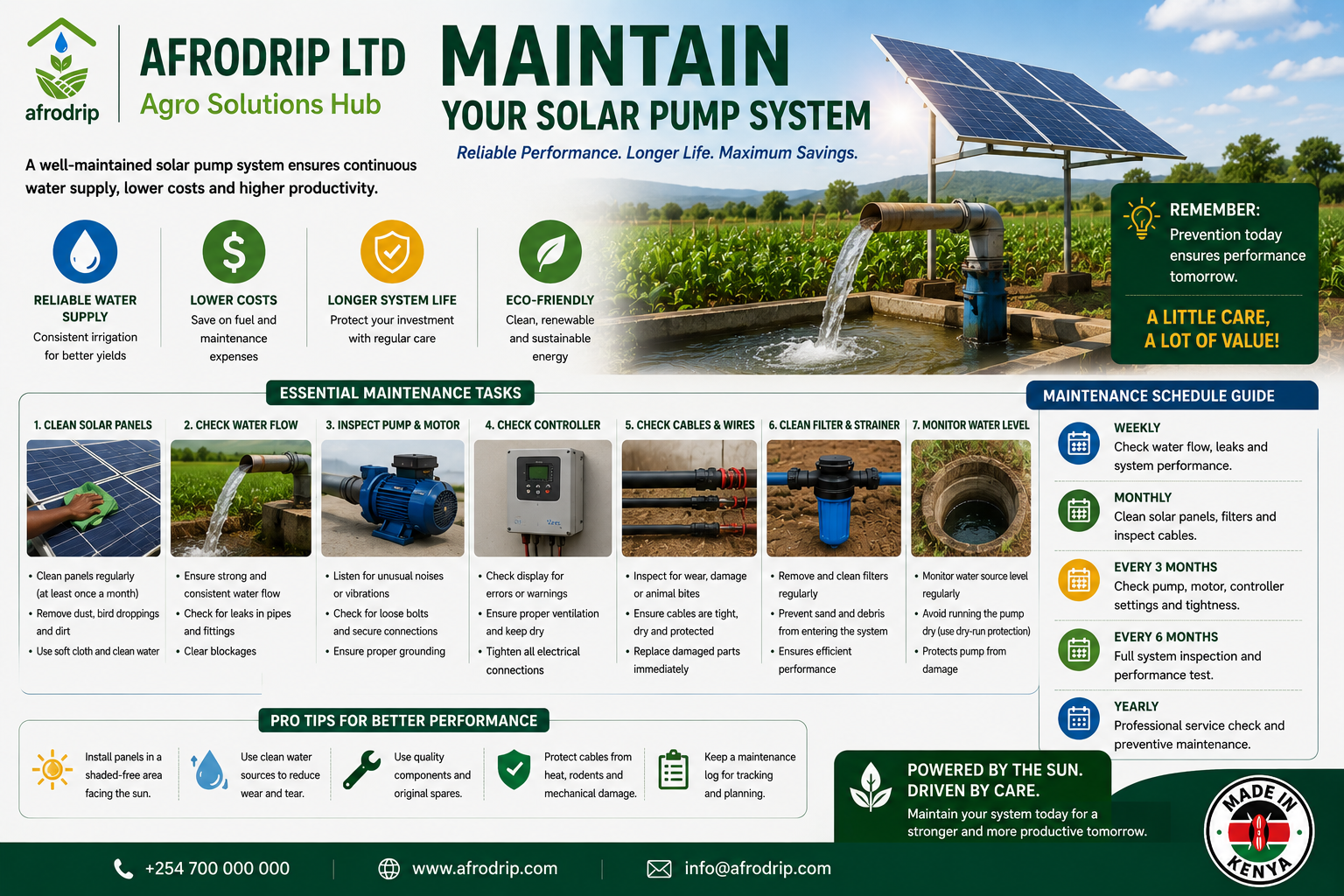
Sunlight into Harvests: Why Solar-Powered Water Pumps Are Transforming Irrigation for Kenya's Farmers

Why solar-powered water pumps are transforming irrigation for Kenya's smallholder and commercial farmers — evidence from field programmes, development data, and peer-reviewed research.

Article12 min

Recommended Bed Dimensions, Plant Spacing and Dripline Lateral/Emitter Intervals

KALRO-based spacing and dripline emitter guidance for tomato, pepper, eggplant, onion, melon, squash and carrot under Kenyan conditions.

Ask our Virtual Agronomist